• Home
  • Comparisons
  • Cloudways vs WooCommerce: Which Is Better for E-commerc…

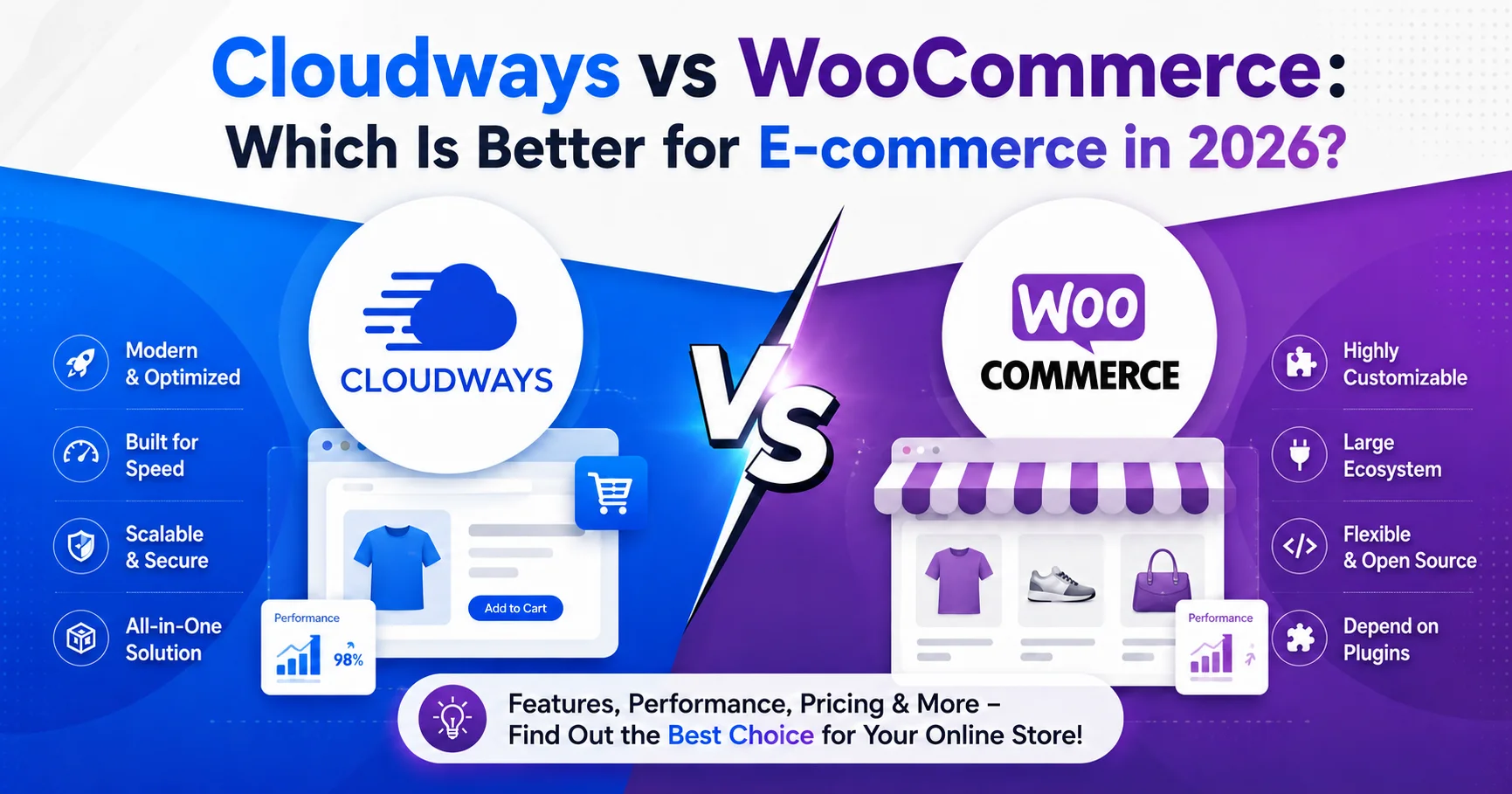
Cloudways vs WooCommerce: Which Is Better for E-commerce in 2026?

Winner: Cloudways
WINNER
Cloudways logo

Cloudways

Automated multi-cloud management panel to deploy and scale apps with zero server administration hassle.

4.7/10

free

Try Cloudways
VS
WooCommerce logo

WooCommerce

The open-source e-commerce solution for WordPress

4.5/10

freemium

Try WooCommerce
Cloudways vs WooCommerce: Which Is Better for E-commerce in 2026?

Overview

Choosing the ideal foundation for your e-commerce storefront is critical to your online retail success. While traditional setups force online store owners to constantly balance server management and complex plugin architectures, modern technology offers more streamlined approaches. This in-depth comparison looks closely at Cloudways—a next-generation automated managed cloud hosting platform—and WooCommerce, the open-source self-hosted WordPress giant that currently powers millions of global digital shops.

Both platforms offer store owners incredible flexibility and scaling potential, but they approach website infrastructure from completely different angles. WooCommerce provides total creative control over your online shop's frontend but leaves all security updates, cloud provisioning, and loading speed configuration completely up to you. Cloudways, on the other hand, acts as a managed automation wrapper that automatically spins up, protects, and scales your database and applications across premium servers like DigitalOcean and AWS without needing any complex system administration skills.

In this guide, we break down their performance metrics, core pricing structures, and server management tools so you can make an informed decision for your e-commerce inventory. Whether you are migrating away from slow shared servers or building a brand-new storefront, finding the right blend of speed and usability ensures your checkout cart stays secure and active around the clock.

Feature Comparison

Feature Cloudways WooCommerce Edge
Server Setup One-Click Automated Deployment Manual Hosting Setup Needed Cloudway
Control Panel Modern Intuitive SaaS Dashboard Inside WordPress Admin Dashboard Cloudway
Security Automated Firewalls & Free SSL Requires Third-Party Plugins Cloudway
Scalability Instant CPU/RAM Scaling Tiers Depends Entirely on Your Host Cloudway
Store Flexibility Built for PHP/Custom E-com Massive Plugin Ecosystem WooComme
Backups Automated Daily Cloud Backups Requires Manual/Paid Solutions Cloudway

Cloudways vs WooCommerce | Which Is Better for Tech 2026

Managing backend server infrastructure can be a major bottleneck for scaling e-commerce businesses. WooCommerce is completely open-source and self-hosted, meaning that the user is entirely responsible for selecting a hosting provider, configuring server resources, and maintaining server software stacks. If a store faces a sudden traffic spike, the owner must manually migrate to a larger server or negotiate resource limits with their web host. Conversely, Cloudways Managed Cloud Hosting serves as an automated SaaS management wrapper on top of elite multi-cloud providers like DigitalOcean, AWS, and Google Cloud. It replaces complex command-line interfaces with a streamlined, intuitive dashboard designed for zero-technical server administration. Deploying a secure cloud server, launching a clean staging environment, or configuring system updates takes just a single click, making cloud computing highly accessible to retail entrepreneurs.

Loading Speeds, Backups, and Performance

Website performance directly influences e-commerce conversion rates. Because WooCommerce runs on top of a standard WordPress database architecture, its performance depends entirely on the quality of your underlying hosting server and the number of active database plugins. Maintaining optimal database indexing, managing server-side object caching, and preventing resource bloating require continuous developer supervision. Cloudways addresses performance issues at the server level by utilizing optimized, isolated cloud infrastructure stacks. It features built-in real-time server tracking graphs that monitor RAM, bandwidth, and CPU utilization under a centralized dashboard. Furthermore, data protection is native to the platform; Cloudways includes automated daily server backups and free Let's Encrypt SSL certificates out of the box, ensuring that consumer transactional data is securely guarded without requiring heavy, performance-slowing security plugins.

Ecosystem Flexibility and Scaling Potential

Website performance directly influences e-commerce conversion rates. Because WooCommerce runs on top of a standard WordPress database architecture, its performance depends entirely on the quality of your underlying hosting server and the number of active database plugins. Maintaining optimal database indexing, managing server-side object caching, and preventing resource bloating require continuous developer supervision. Cloudways addresses performance issues at the server level by utilizing optimized, isolated cloud infrastructure stacks (such as the ThunderStack consisting of Varnish, Redis, Nginx, and Apache). It features built-in real-time server tracking graphs that monitor RAM, bandwidth, and CPU utilization under a centralized dashboard. Furthermore, data protection is native to the platform; Cloudways includes automated daily server backups and free Let's Encrypt SSL certificates out of the box, ensuring that consumer transactional data is securely guarded without requiring heavy, performance-slowing security plugins.

Our Verdict

For managed cloud hosting, optimized multi-cloud database performance, and hands-off server scaling, Cloudways is the superior choice for 2026.

Conclusion

Ultimately, both options offer incredible paths toward e-commerce success depending on your technical background. If you prefer to manually fine-tune your server stacks, manage independent shared hosting setups, and build strictly within the custom WordPress plugin network, WooCommerce remains a legendary contender. However, for digital agencies, scaling retail businesses, and e-commerce developers looking for automated daily backups, free SSL certificates, single-click staging sites, and instant multi-cloud hosting deployments without the tech headaches, Cloudways Managed Cloud Hosting is the superior choice for 2026.

Overall Winner: Cloudways

Based on features, pricing, value and overall performance.

Try Cloudways →
Share: Twitter Facebook

Quick Facts

Cloudways WooCommerce
Score 4.7/10 4.5/10
Pricing free freemium

Related Comparisons

Shopify vs WooCommerce: Which E-Commerce Platform Is Right for You in 2026?
Shopify

Read More Guides

In-depth reviews, tips and SaaS guides.

Visit Blog →